The Best Ways to Invest in Gold and Silver: A Comprehensive Guide
Should you own physical gold and silver, or should you choose a physically backed ETF? Learn about the pros and cons.

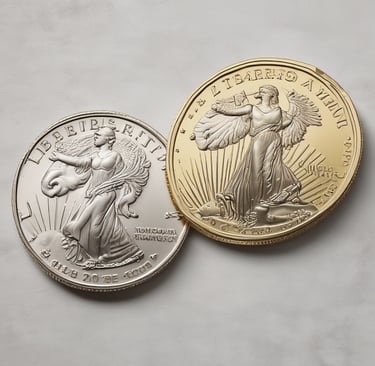
Introduction to Gold and Silver Investments
Investing in gold and silver has remained a popular choice among investors looking to diversify their portfolios. Precious metals often hold their value during economic downturns, making them a reliable asset. This blog will explore the top ways to invest in gold and silver, including gold and silver ETFs and the advantages and disadvantages of owning physical gold.
Gold and Silver ETFs: A Convenient Investment Option
Exchange-Traded Funds (ETFs) that focus on gold and silver provide an efficient way to invest in these precious metals without the need for physical ownership. Gold and silver ETFs typically track the price of the underlying metals, allowing investors to buy and sell shares easily on the stock exchange.
Key Considerations for ETF Selection:
Physical Backing vs. Futures Contracts: The most significant distinction. Physically backed ETFs (like GLD or SLV) hold actual gold or silver bullion in secure vaults, aiming to track the spot price of the metal directly. Futures-based ETFs, on the other hand, invest in derivatives contracts, potentially deviating from the spot price over time. For direct, long-term exposure to the metal itself, physically backed ETFs are generally preferred.
Expense Ratio (ER): This is the annual fee charged by the fund, expressed as a percentage of your investment. A lower expense ratio means more of your money stays invested. Over decades, even small differences can accumulate significantly.
Liquidity: ETFs with high trading volumes and assets under management (AUM) are generally easier to buy and sell without impacting market prices.
Sponsor and Custodian: Research the reputation of the ETF provider and the security of their bullion storage.
Tracking Error: How closely does the ETF's performance mirror the actual price of gold or silver? While physically backed ETFs tend to have low tracking error, it's still a factor to monitor.
Unlike physical gold or silver, which may require significant effort to buy or sell, ETFs can be purchased and liquidated quickly, offering flexibility to investors. Additionally, investing in gold and silver ETFs often comes with lower fees compared to other investment methods. This makes ETFs an ideal choice for both novice and experienced investors looking to gain exposure to precious metals.
Generating High Income with Gold: A Look at the IAUI ETF
For decades, retirees have faced a classic investing dilemma: how to hedge against inflation without sacrificing monthly cash flow. Traditional safe havens like gold protect your purchasing power, but they come with a major downside—they pay zero dividends.
If you are trying to live off your portfolio, dead assets don't pay the electric bill.
That is why a new category of funds is gaining traction among income-focused investors. Today, we are breaking down the NEOS Gold High Income ETF (IAUI)—a fund designed to transform gold into a monthly paycheck.
What is the IAUI ETF?
Launched by NEOS, IAUI is an actively managed exchange-traded fund. Its primary objective is simple: provide investors with exposure to the price of gold while generating high monthly distributions.
Instead of just letting gold sit in a vault, the fund uses a sophisticated options overlay strategy to extract income from the asset class.
The Key Numbers
Distribution Yield: ~12.3% to 12.5% (paid out monthly)
Expense Ratio: 0.79%
Net Assets: ~$455 million
How the Strategy Works
IAUI achieves its double-digit yield through a three-part portfolio structure:
The Cash Collateral: The fund keeps a large portion of its assets in short-term U.S. Treasury Bills to earn safe, baseline interest.
The Gold Exposure: Up to 25% of the portfolio is invested in physically backed gold vehicles (like the Goldman Sachs Physical Gold ETF) or gold-linked derivatives.
The Options Overlay: This is the income engine. The fund utilizes a synthetic covered call strategy. By writing out-of-the-money call options, the fund collects premium income from buyers who are betting on gold prices to skyrocket. That premium is what gets passed down to you as a monthly dividend.
The Trade-Offs: Is it Right for Your Retirement?
Before swapping your current gold holdings or income funds into IAUI, you must understand the mechanics of risk and reward.
The Pros
High Monthly Cash Flow: Turning a historically non-yielding asset into a 12% income stream is highly valuable for retirees who need immediate liquidity.
Inflation Protection: You still maintain a baseline connection to gold, which historically acts as a buffer when fiat currencies lose purchasing power.
Tax Efficiency: NEOS structures the options strategy using Section 1256 contracts, which can offer favorable tax treatment on distributions.
The Cons
Capped Upside: If gold enters a massive bull market and spikes 30% in a year, IAUI will underperform. The options the fund writes will cap your capital gains in exchange for that steady monthly income.
Higher Fees: At 0.79%, the management fee is significantly higher than a standard, passive gold trust.
The Bottom Line for Real Retirees
IAUI is not a pure play on gold. If your goal is to maximize total generational wealth or bet on a systemic financial collapse, buying physical gold bullion or a low-cost spot ETF remains your best option.
However, if you are strictly in the distribution phase of your retirement—where monthly cash flow dictates your quality of life—IAUI offers a compelling compromise. It allows you to keep an allocation to hard assets without sacrificing the regular income you need to stay comfortably retired.
The Pros and Cons of Owning Physical Gold
While gold and silver ETFs present a hassle-free investment strategy, some investors prefer owning physical gold or silver. This approach can offer security and the satisfaction of possessing a tangible asset. However, there are several pros and cons to consider when investing in physical precious metals.
One significant advantage of owning physical gold is the protection it provides against inflation and currency fluctuations. During periods of economic uncertainty, having tangible assets can shield investors from market volatility. Moreover, gold has intrinsic value that remains relatively stable over time.
On the downside, owning physical gold often involves additional costs, such as storage and insurance, which can affect overall profitability. Furthermore, the buying and selling of physical gold may require more time and effort than transacting in ETFs. Investors should also be mindful of potential forgery, as not all dealers guarantee the authenticity of their products.
Finding the Right Investment Strategy
Ultimately, the best way to invest in gold and silver depends on individual investment goals and preferences. Gold and silver ETFs offer a simplistic approach that suits various investors, while owning physical gold provides a more tangible and potentially secure investment option. It's crucial for investors to assess their risk tolerance and investment timeline before choosing the right strategy. No matter the choice, engaging with precious metals can be a valuable addition to any investment portfolio.
Contact
Questions? Reach out anytime.
© 2026. All rights reserved.
*The information found on this website should not be interpreted as investment advice. Investors are encouraged to conduct their own research.