Tax Efficient Investing: Keep More of Your Money
Learn how tax efficient investing works and which funds belong in taxable, IRA, and Roth accounts. Maximize returns and minimize taxes today.
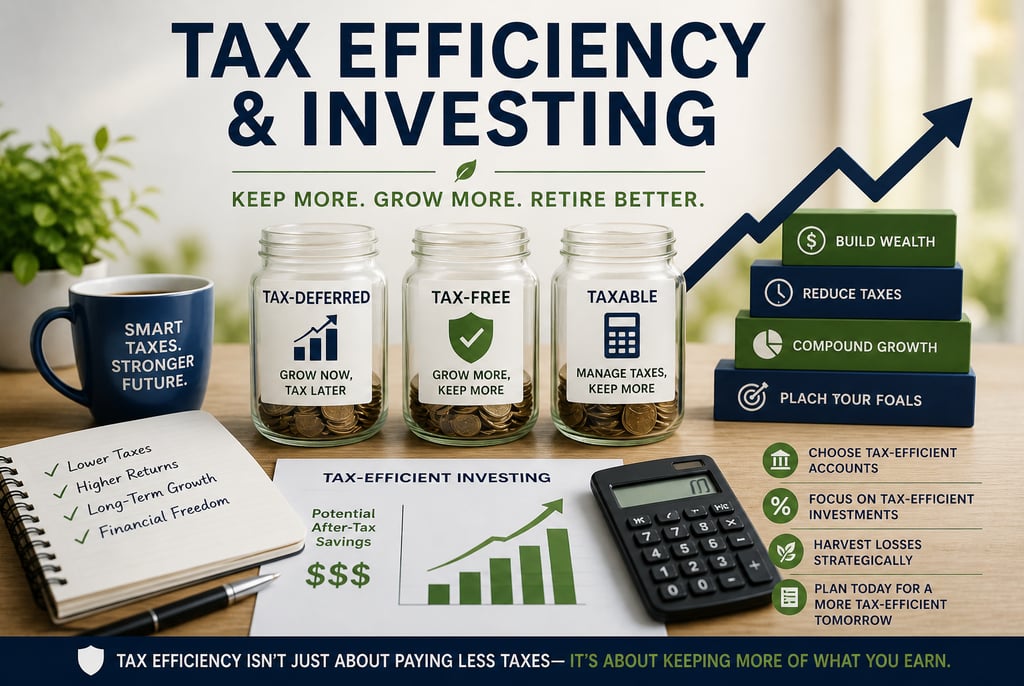
Tax Efficient Investing: How to Keep More of Your Money
Most investors focus on returns. Smart investors focus on what they keep.
Because at the end of the day, taxes are often the biggest expense in your portfolio—and if you’re not planning for them, they can quietly drain thousands (or more) from your long-term wealth.
This guide from Retired and Real breaks down exactly how tax efficient investing works and how to structure your accounts so more of your money stays where it belongs: with you.
What Is Tax Efficient Investing?
Tax efficient investing is the strategy of:
Minimizing taxes on your investments while maximizing long-term returns
This doesn’t mean taking more risk or chasing higher returns—it simply means being smarter about where you place your investments.
The 3 Types of Investment Accounts (And Why They Matter)
To invest tax-efficiently, you need to understand the three main “buckets”:
Taxable Brokerage Account
Taxes apply every year
Dividends and capital gains are taxed
Traditional IRA
Tax-deferred growth
Taxes paid when you withdraw
Roth IRA
Tax-free growth
No taxes on withdrawals (if qualified)
The key strategy: put the right investments in the right account
Best Investments for a Taxable Account
This is where most investors lose money to taxes—so efficiency is everything.
Focus On:
Low-cost index ETFs
Qualified dividend funds
International exposure (tax credit benefit)
Why These Work:
ETFs are structured to reduce capital gains distributions
Qualified dividends are taxed at lower rates
Low turnover = fewer taxable events
Avoid:
Bond funds (taxed as ordinary income)
REITs (less favorable tax treatment)
Actively managed funds with frequent trades
Best Investments for a Traditional IRA
Think of this as your tax shelter for income-heavy investments.
Bonds
Real estate funds (REITS)
Active or higher turnover funds
Small-Cap/value tilt
Why This Works:
No taxes on dividends or capital gains inside the account
Shields high-income investments from annual taxation
Best Investments for a Roth IRA
This is your most powerful wealth-building account.
Focus On Growth:
Momentum and growth funds
Small-cap upside
Sector opportunities (optional)
Why This Matters:
Every dollar of growth is tax-free
No capital gains taxes
No required minimum distributions
If something is going to significantly grow over time, this is where it belongs.
Common Tax Mistakes to Avoid
Even experienced investors get these wrong:
Holding bonds in taxable accounts
Putting slow-growth funds in a Roth IRA
Ignoring tax drag over time
Overtrading in taxable accounts
Bonus Tips to Boost Tax Efficiency
Use tax-loss harvesting in taxable accounts
Hold investments long-term to qualify for lower tax rates
Rebalance inside IRAs instead of taxable accounts
Be mindful of dividend types (qualified vs non-qualified)
Final Thoughts
Tax efficient investing isn’t complicated—but it is powerful.
By simply placing the right investments in the right accounts, you can:
✔ Reduce your annual tax bill
✔ Increase long-term returns
✔ Build wealth more efficiently over time
And that’s what Retired and Real is all about—keeping more of what you earn and making smarter moves with your money.
Contact
Questions? Reach out anytime.
© 2026. All rights reserved.
*The information found on this website should not be interpreted as investment advice. Investors are encouraged to conduct their own research.